
 Français
 Español
 日本語
 العربية
 繁体中文
 简体中文

eCall Data Validation: Are You Transmitting More Than the Minimum Required Information?
Contact: [email protected] | WhatsApp: +86 17663606879
In an emergency, an eCall system must transmit the information needed to support an emergency response.
But how can automotive manufacturers ensure that the data transmitted by an in-vehicle emergency system remains within the defined scope?
For OEMs, Tier 1 suppliers and eCall system developers, data content and transmission logic deserve careful attention during system validation.
1. Regulatory Background: Regulation (EU) 2015/758
Regulation (EU) 2015/758 establishes type-approval requirements for the deployment of the 112-based eCall in-vehicle system.
Article 6 addresses privacy and data protection.
In particular, Article 6(8) states that the Minimum Set of Data (MSD) sent by the 112-based eCall system should contain only the minimum information referred to in the cited EN 15722:2011 standard, and that no additional data should be transmitted by the 112-based eCall system.
The same provision also addresses the storage and permanent deletion of MSD data.
2. What Should Automotive Developers Pay Attention To?
A. Data Content
The MSD is not intended to become a general-purpose vehicle data package.
Development teams should review:
The data fields included in the MSD
The source of each data item
The mapping between vehicle information and the applicable MSD definition
Whether any additional information is being included in the 112-based eCall transmission
B. Data Transmission
The transmission process should be reviewed against the intended emergency-call workflow.
Relevant project checks may include:
Whether transmission is triggered under the intended emergency conditions
Whether the correct MSD content is generated
Whether the transmitted data matches the prepared data
Whether unexpected or additional fields appear in the transmission
C. Data Storage and Deletion
Article 6 also addresses data retention and deletion.
Engineering teams should review:
How MSD information is temporarily stored
How data is removed when it is no longer required
Whether the system supports full and permanent deletion
Whether data is accessible outside the 112-based eCall system before an eCall is triggered
3. What About TPS eCall and Other Connected Services?
An important distinction is necessary.
The requirements discussed above concern the 112-based eCall in-vehicle system. They should not automatically be interpreted as a blanket prohibition on all data processing by every connected vehicle service.
Article 6 separately addresses TPS eCall and other added-value services.
It also requires appropriate separation between the 112-based eCall system and additional systems providing TPS eCall or added-value services, including restrictions on the exchange of personal data between them.
This distinction should be reflected in the system architecture and compliance assessment.
4. A Practical eCall Validation Checklist
For project teams, the following checks can help organise validation activities:
Data definition
Review the applicable MSD specification and version.
Map each transmitted data field to its technical definition.
Identify any additional fields in the transmission structure.
Transmission behaviour
Verify the data generated during the intended emergency-call scenario.
Compare the prepared MSD with the transmitted content.
Review abnormal and interrupted transmission scenarios.
Data protection
Review data access before eCall activation.
Examine data storage and deletion mechanisms.
Assess separation between the 112-based eCall and additional service systems.
These are project validation recommendations. The specific test procedures should be determined using the applicable technical and type-approval requirements.
5. An Important Note on Standard References
The consolidated text supplied for this review is dated 9 May 2024.
It is important to distinguish Article 6(8), which refers to EN 15722:2011, from Article 5(8)(d), which lists EN 15722:2020 in its technical standards section.
Project teams should verify the applicable legal text, standard edition and relevant implementing requirements before finalising a compliance assessment.
Final Thoughts
eCall compliance is not only about establishing an emergency call. The accuracy of data content, transmission behaviour, storage and privacy protection are also important parts of the overall system assessment.
At Blue Asia, we support automotive electronics projects through EMC testing, wireless certification and automotive-related testing and compliance services.
For teams developing in-vehicle communication and connected automotive systems, we welcome discussions on potential testing and certification cooperation.
Contact: [email protected] | WhatsApp: +86 17663606879
 Blog
Why Two-Wheelers Are Becoming As Complex As Passenger Cars
Read article
 Blog
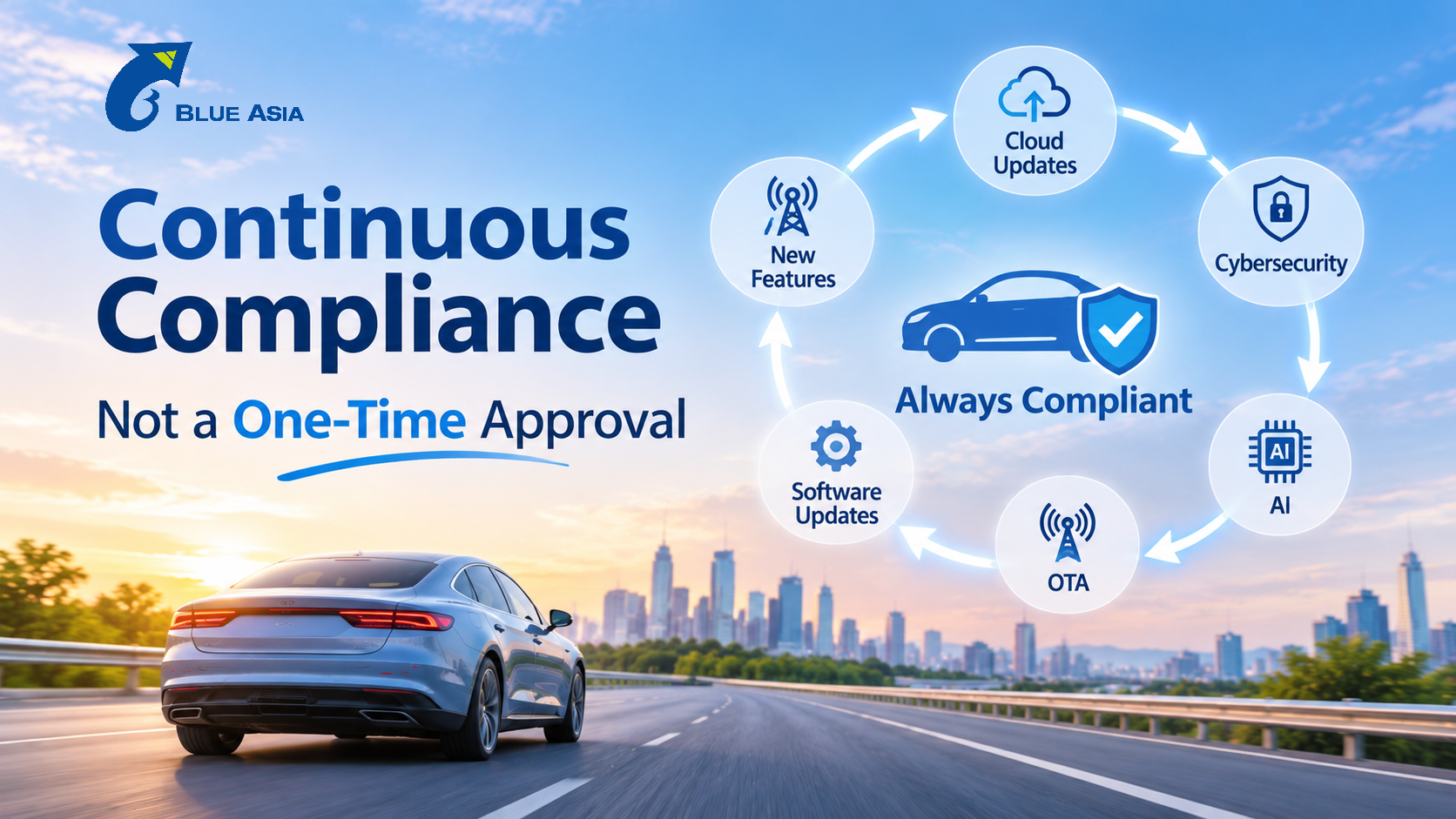
Why Future Vehicle Certification Will Be Continuous Instead of One-Time Approval
Read article
 Blog
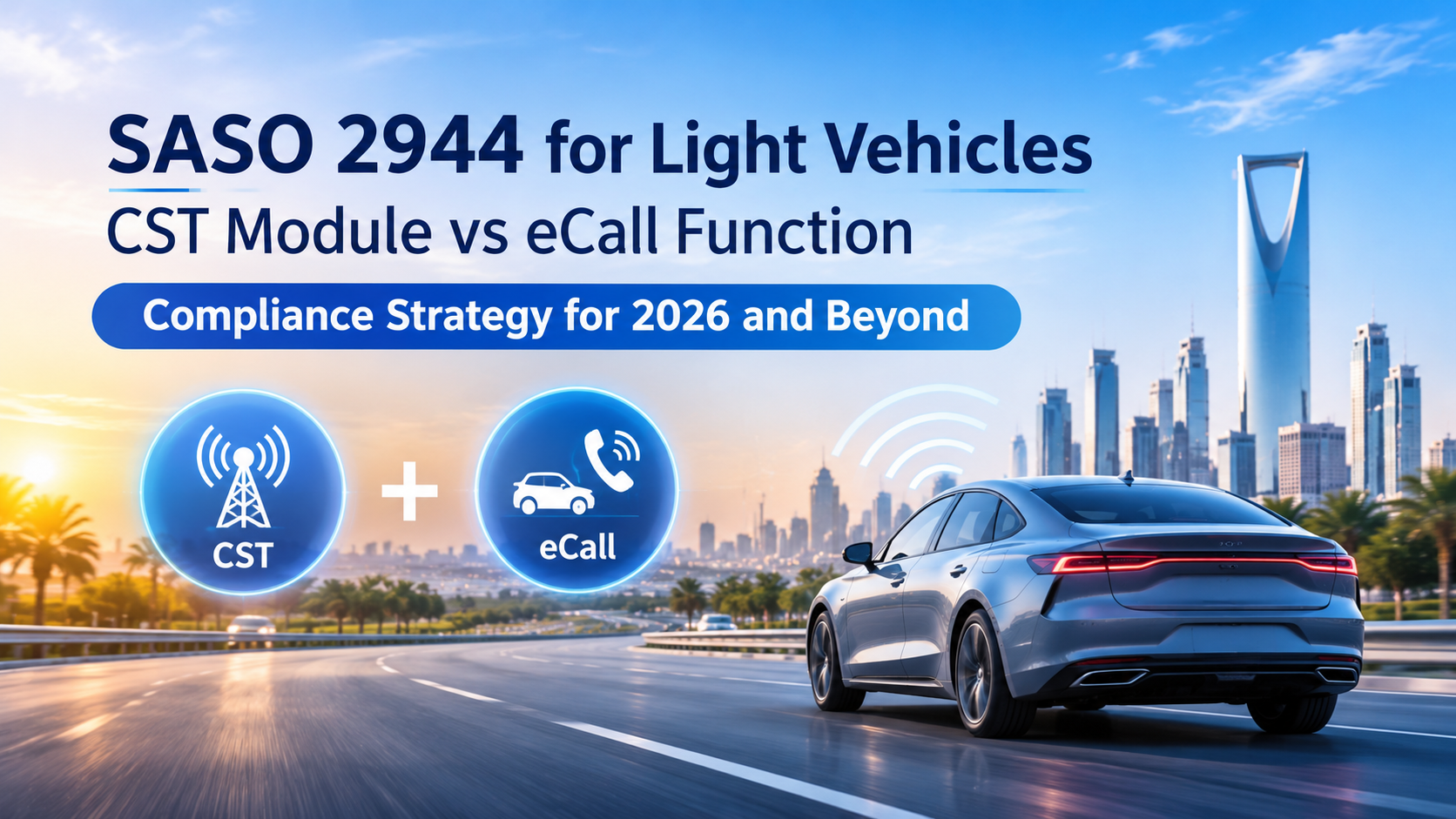
Saudi SASO 2944 for Light Vehicles: How to Separate CST Module RF Approval from Vehicle-Leve
Read article
 Blog
Adding 4G/5G eCall to an Existing Vehicle? The Hard Part Is Not the Cellular Module.
Read article
 Blog
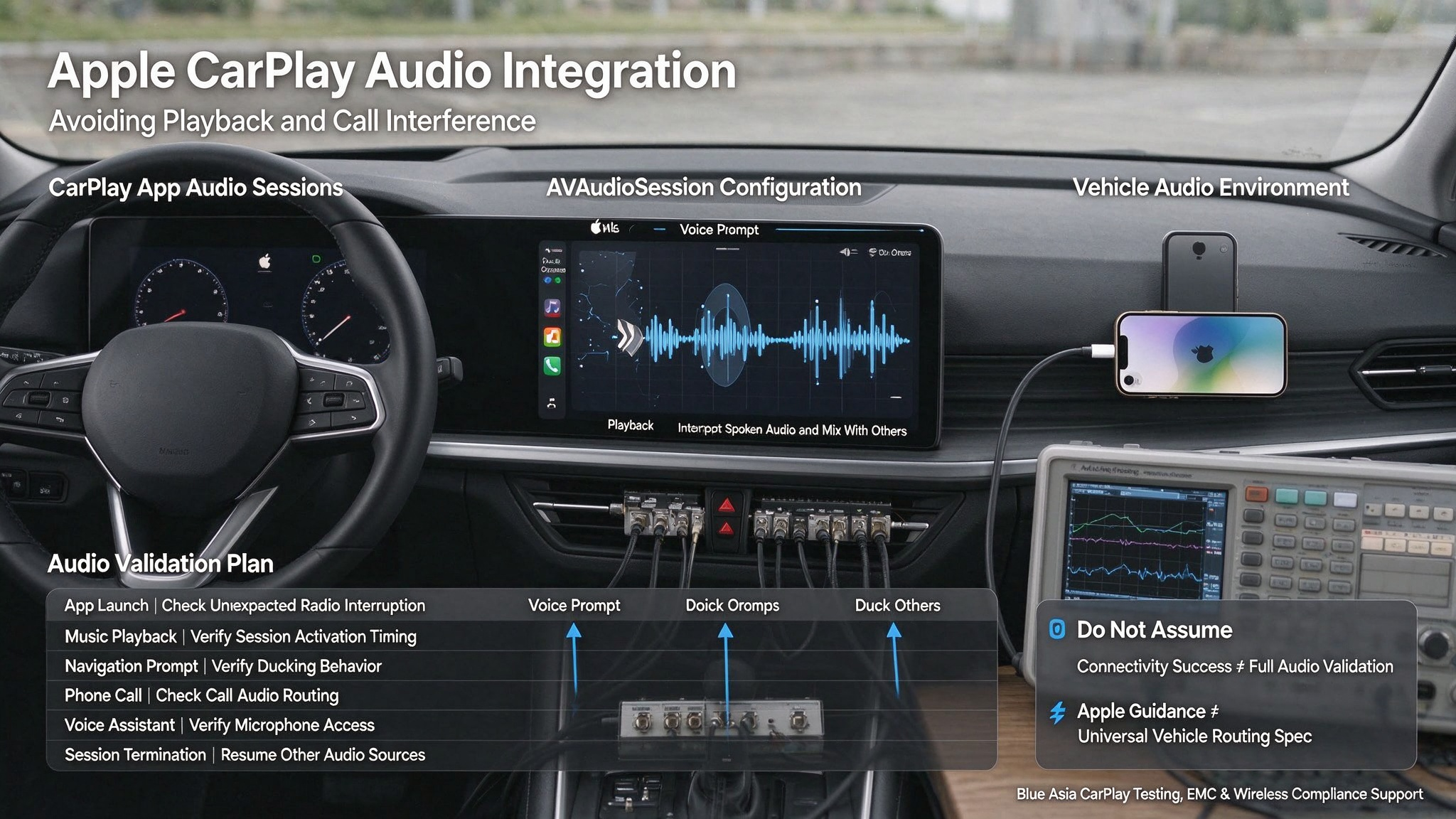
Apple CarPlay Audio Integration: How to Avoid Playback and Call Interference
Read article
 Blog
DAB+ Receiver Validation: How to Manage Service Following and Station Information
Read article

 4000259520