
 Français
 Español
 日本語
 العربية
 繁体中文
 简体中文


The Future Compliance Engineer Will Need to Understand Systems—Not Standards
The Future Compliance Engineer Will Need to Understand Systems—Not Standards
Five years ago, knowing standards was enough.
Five years from now, understanding systems will matter more.
That may be the biggest transformation happening in automotive compliance today.
For decades, the role of a compliance engineer was relatively straightforward.
Understand the regulations.
Read the standards.
Prepare the documentation.
Coordinate laboratory testing.
Support certification.
This approach worked when vehicles were built from relatively independent electronic systems.
But the automotive industry has changed.
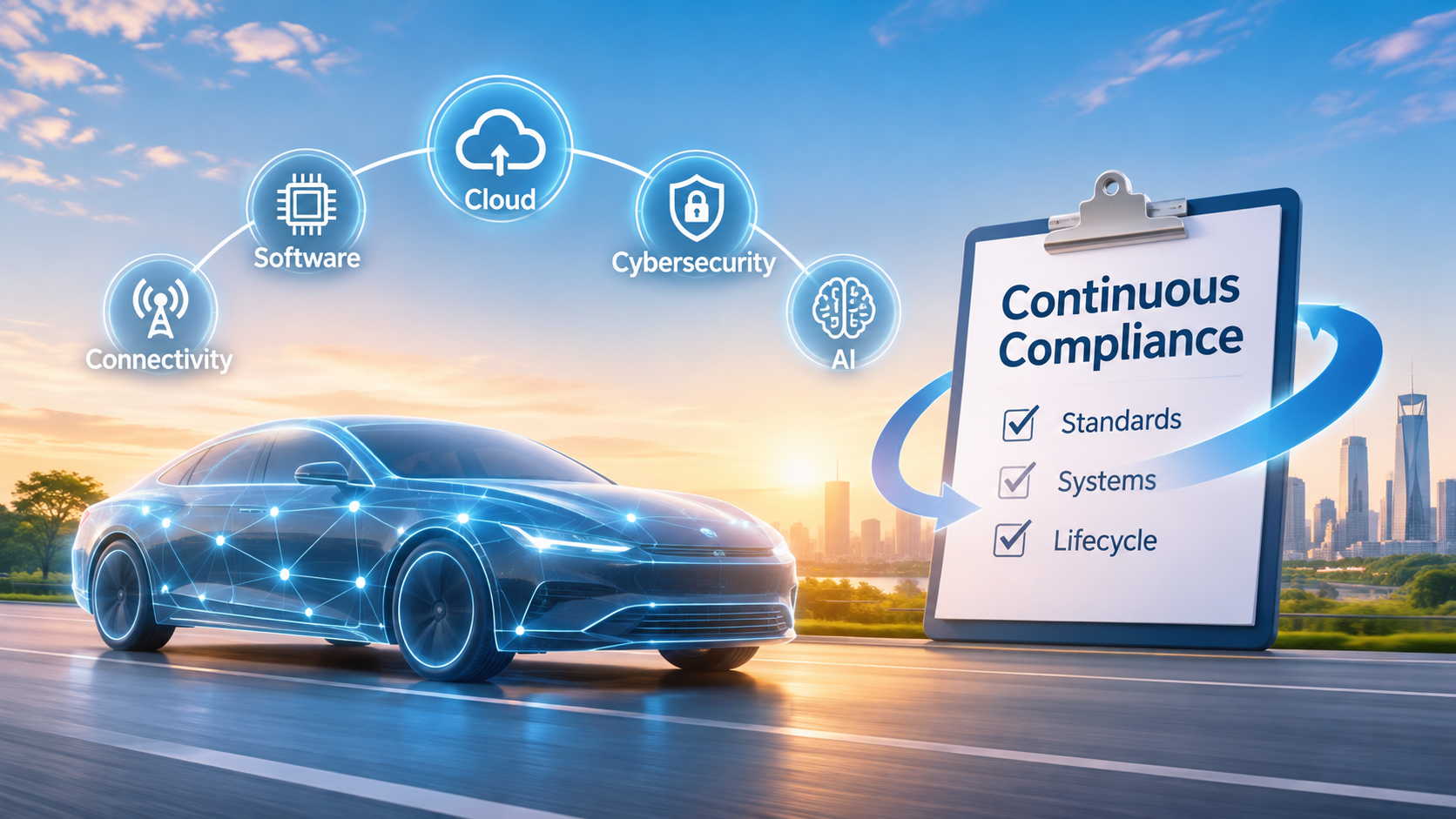
Modern vehicles are becoming Software-Defined Vehicles (SDVs), where software, connectivity, cloud services, cybersecurity, and AI continuously interact.
As a result, compliance is no longer just about understanding regulations.
It is about understanding how the entire vehicle system behaves.
The future compliance engineer will not simply be an expert in standards.
They will become a system engineer.
Standards Explain the Requirements. Systems Explain the Risks.
Many engineers believe certification begins by reading a regulation.
In reality, certification failures often begin long before anyone opens a standard.
Consider a simple example.
A vehicle passes:
RF testing
EMC testing
Cybersecurity review
Android Auto validation
Software verification
Yet the complete vehicle still fails integration.
Why?
Because every subsystem performed correctly individually, but not together.
The standards were satisfied.
The system was not.
This is exactly why system thinking is becoming more valuable than memorizing individual requirements.
The Vehicle Is No Longer a Collection of ECUs
Traditional vehicle development separated engineering into clear disciplines.
RF engineers focused on wireless performance.
Software engineers wrote code.
Cybersecurity specialists handled security.
Compliance engineers managed certification.
Today, those boundaries are disappearing.
Modern vehicles increasingly rely on:
Central Computing
Domain Controllers
High-Speed Ethernet
OTA Updates
Cloud Connectivity
AI Applications
Service-Oriented Software
Changing one subsystem may affect many others.
A software update may influence RF behavior.
A cybersecurity patch may change communication timing.
A cloud service modification may alter vehicle functionality.
Compliance engineers must understand these interactions—not just the regulations behind them.
Certification Is Becoming System Engineering
One of the biggest industry shifts is moving from component certification to system validation.
For example:
A Bluetooth module passes testing.
Wi-Fi performs correctly.
Android Auto is approved.
EMC meets requirements.
The vehicle still delivers a poor customer experience.
Why?
Because certification increasingly depends on how technologies work together, rather than how individual technologies perform alone.
The future question is no longer:
"Did this component pass?"
It becomes:
"Does the complete system remain compliant under real operating conditions?"
Five Technologies Are Redefining Compliance
1. Software
Software now controls almost every major vehicle function.
From infotainment to emergency communication, software determines how hardware behaves.
Compliance engineers must understand:
Software versions
Configuration management
Change control
Traceability
OTA impact
Software knowledge is no longer optional.
2. Connectivity
Connected vehicles simultaneously support:
Bluetooth
Wi-Fi
Cellular
GNSS
UWB
DAB+
V2X
These technologies share antennas, processors, operating systems, and communication resources.
A compliance engineer who understands only RF testing may overlook system-level interactions that create certification risks.
3. Cybersecurity
Cybersecurity regulations such as UN R155, UN R156, and EN 18031 have fundamentally changed automotive compliance.
Today's engineers must understand:
Risk management
Secure architecture
Software updates
Security lifecycle
Vulnerability management
Compliance is becoming a continuous engineering discipline rather than a documentation exercise.
4. Cloud Platforms
Vehicles increasingly depend on cloud infrastructure.
Navigation.
Remote diagnostics.
Connected services.
Fleet management.
Digital keys.
Software downloads.
Compliance now extends beyond the vehicle itself.
Understanding cloud architecture is becoming increasingly important for future certification engineers.
5. Artificial Intelligence
AI is beginning to influence:
Voice assistants
Driver monitoring
Predictive maintenance
Smart cockpit systems
Driver assistance
Unlike traditional software, AI models continue evolving.
Future compliance engineers must understand how software learning, model updates, and AI lifecycle management may influence regulated vehicle functions.
The Best Compliance Engineers Already Think Like Architects
Some of the most successful compliance professionals I've worked with have one thing in common.
They rarely ask:
"Which standard applies?"
Instead, they ask:
Which systems interact?
What happens after an OTA update?
What changes if the cloud platform is updated?
Which suppliers influence this function?
Where could software affect RF behavior?
How will cybersecurity impact certification?
They think like System Architects, not document reviewers.
That mindset helps identify risks before they become expensive problems.
Future Projects Will Reward Cross-Disciplinary Thinking
Automotive projects are becoming too complex for isolated engineering teams.
Future compliance will require collaboration between:
System Architects
Software Engineers
RF Specialists
Cybersecurity Engineers
Cloud Engineers
Validation Teams
Compliance Professionals
The companies that integrate these disciplines early will reduce development risk, shorten certification timelines, and improve product quality.
Compliance will become part of product design—not just product approval.
The Cost of Thinking Only About Standards
Many organizations still involve compliance teams only after development is nearly complete.
At that stage, changing architecture is expensive.
Late discoveries may lead to:
Additional validation
Software redesign
OTA regression testing
Documentation updates
Supplier rework
Delayed SOP
For global vehicle programs, these changes can easily cost tens of thousands—or even hundreds of thousands of U.S. dollars, often far exceeding the original certification budget.
Understanding systems early is far less expensive than correcting them later.
Building the Next Generation of Compliance Engineers
The role of the compliance engineer is changing faster than many people realize.
Future professionals should develop knowledge in:
✔ Software architecture
✔ Connected vehicle technologies
✔ OTA lifecycle management
✔ Cybersecurity engineering
✔ Cloud services
✔ AI fundamentals
✔ System validation
Understanding standards will always be important.
But understanding how the entire vehicle ecosystem works together will become the real competitive advantage.
Final Thoughts
The automotive industry is entering the era of the Software-Defined Vehicle, where compliance is no longer driven by individual regulations alone.
It is driven by systems.
Future certification success will depend less on memorizing standards and more on understanding the relationships between software, connectivity, cybersecurity, cloud platforms, AI, and system architecture.
The compliance engineers who embrace this transformation will become strategic contributors to vehicle development—not just certification specialists.
At BlueAsia, we help OEMs and Tier 1 suppliers navigate this new generation of automotive compliance through system-level certification planning, OTA compliance, UN R155, UN R156, EN 18031, Android Auto, Apple CarPlay, NG eCall, DAB+, SASO 2938, RF, and EMC testing—helping engineering teams identify system risks before they become certification delays.
Because the future of automotive compliance isn't about knowing more standards.
It's about understanding the entire system behind them.
 Blog
Why Buses And Trucks Face Different Connectivity Challenges Than Passenger Cars
Read article
 Blog
The Future Compliance Engineer Will Need to Understand Systems—Not Standards
Read article
 Blog
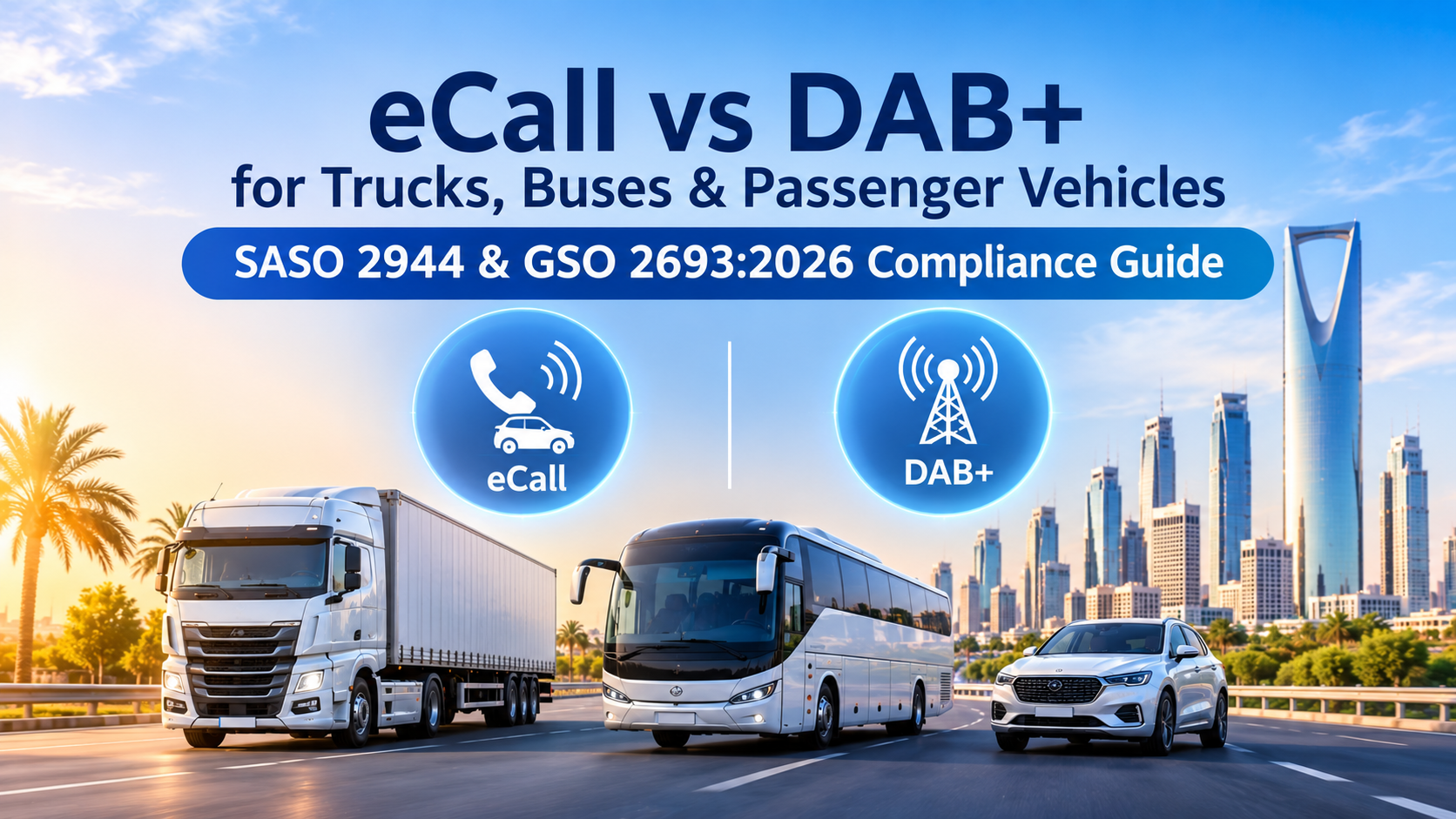
Trucks and Buses Exported to the Middle East: Do eCall and DAB+ Apply the Same Way?
Read article
 Blog
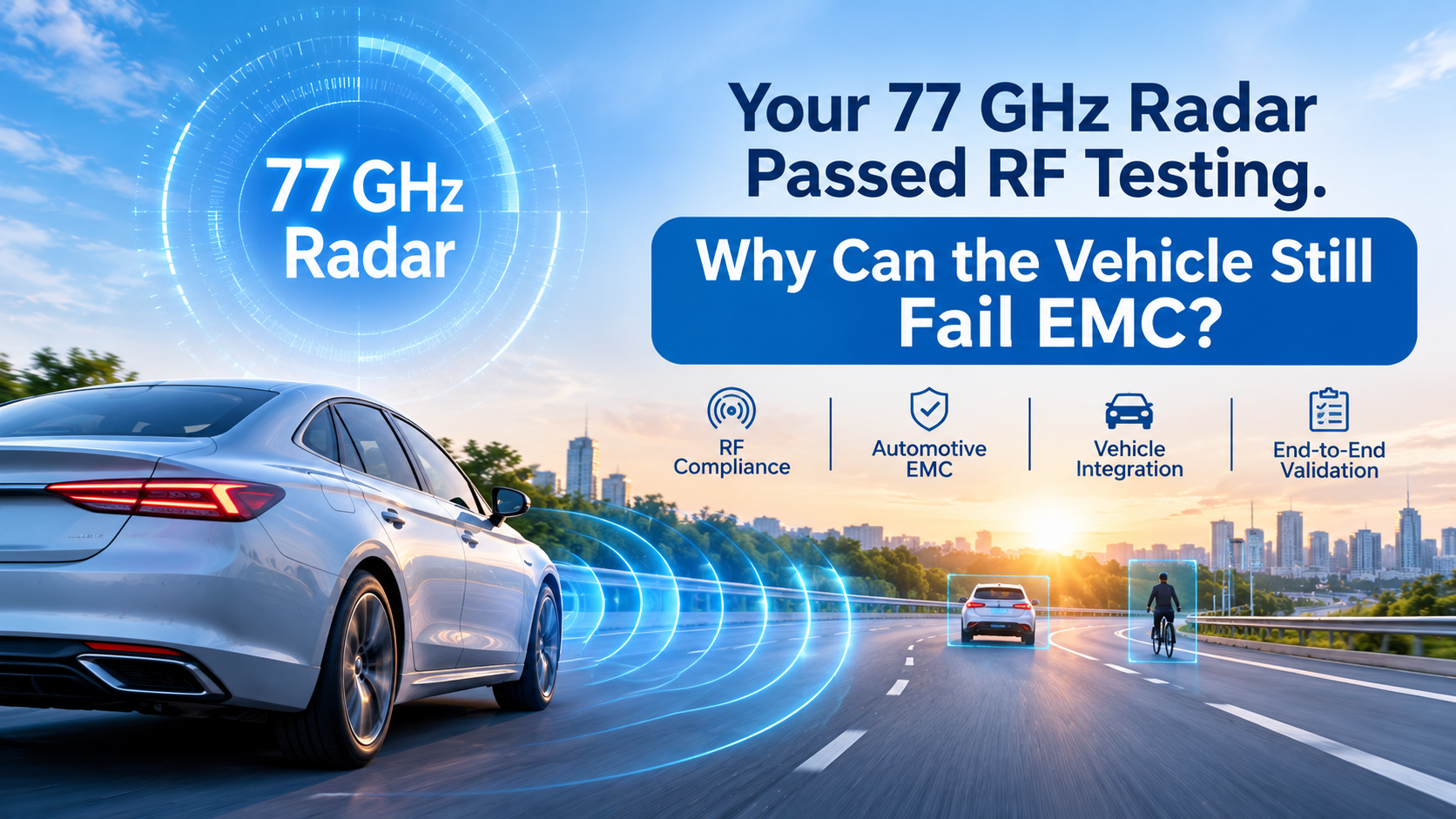
Your 77 GHz Radar Passed RF Testing. Why Can the Vehicle Still Fail EMC?
Read article
 Blog
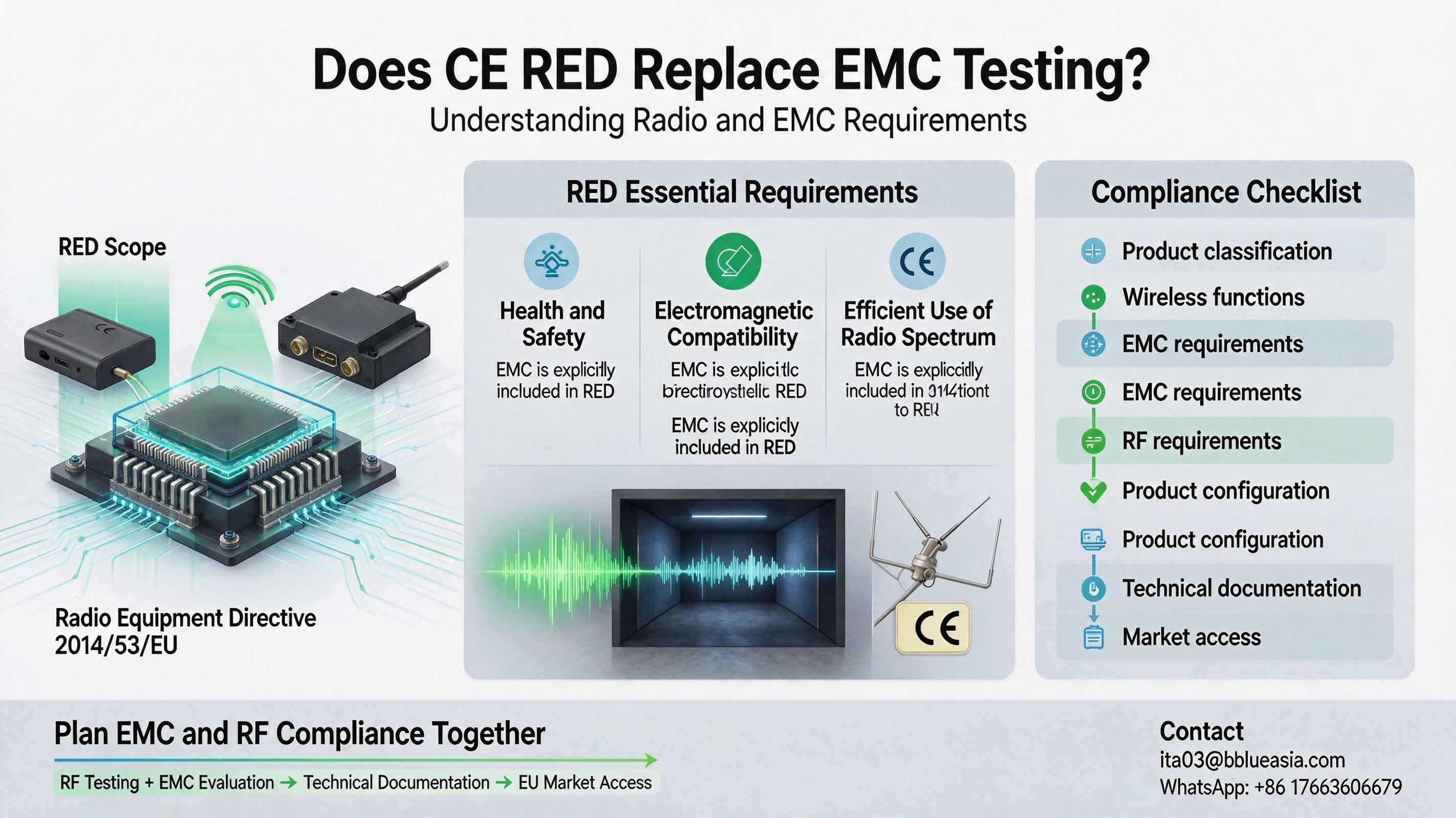
Does CE RED Replace EMC Testing? Understanding the Relationship Between Radio and EMC Requir
Read article
 Blog
Does eCall Work Only After a Crash? Understanding Automatic and Manual Trigger Testing
Read article

 4000259520