
 Français
 Español
 日本語
 العربية
 繁体中文
 简体中文

Bluetooth BQB: What Product Teams Should Clarify at Project Start
Contact:Olivia
Email:[email protected]
Whatsapp:+8617663606879
Has your Bluetooth product completed RF testing? Does that automatically mean it is ready for market?
Not necessarily.
Bluetooth qualification involves more than technical testing. Product details, design information, membership responsibilities and testing arrangements should also be considered at the beginning of a project.
For electronics manufacturers, IoT developers and automotive suppliers, early clarification can help avoid unnecessary project adjustments.
1. Understanding the Bluetooth Qualification Process
The Bluetooth SIG manages the Bluetooth Qualification Process to support product interoperability and compliance with Bluetooth specifications and applicable Bluetooth licensing agreements.
According to the Bluetooth SIG, all Bluetooth products must complete the qualification process before they are taken to market.
The process is managed through the Qualification Workspace.
It is important to distinguish Bluetooth RF testing from the overall Bluetooth Qualification Process. Completing one technical test does not automatically mean that all qualification steps have been completed.
2. Five Questions to Clarify at Project Start
1. Which Company Will Take Responsibility for Qualification?
Identify the company responsible for the product and the relevant Bluetooth SIG membership account.
Bluetooth qualification must be completed under the responsible member company's account.
A supplier's existing qualification cannot automatically be inherited by another company.
2. What Are the Exact Product Names and Model Numbers?
Confirm the commercial product name and model number before starting the qualification process.
The Bluetooth SIG requires product details to be provided through Qualification Workspace.
Product names and model numbers should accurately reflect the products being marketed, advertised, distributed and sold.
This is particularly important when a product has multiple variants.
3. Does the Product Use an Existing Bluetooth Design?
Determine whether the product uses an existing Bluetooth Design or requires a different design implementation.
This information can affect the qualification route and the documentation required.
Product teams should review the relevant Design information rather than assuming that a similar product automatically qualifies.
4. What Testing Is Required?
The testing scope is determined through the qualification process.
According to Bluetooth SIG guidance, the features selected in the Implementation Conformance Statement (ICS) Selection step determine the applicable test cases.
The resulting test plan should be reviewed before arranging laboratory testing.
5. Does the Project Require an External BQTF?
Not every Bluetooth test must be conducted by an external facility.
However, when the Qualification Workspace test plan identifies Category A tests at or below the Host Controller Interface (HCI) layer, the applicable test results must be provided by a recognized Bluetooth Qualification Test Facility (BQTF), unless the member company qualifies for the applicable BRTF arrangement.
The selected facility must also have recognition covering the relevant test scope.
3. What Should Not Be Assumed?
Several points are worth remembering:
A supplier's qualification cannot automatically be transferred to another company.
Completion of RF testing does not automatically establish completion of the entire Bluetooth Qualification Process.
An existing Design should not be assumed to cover every product variant.
Not every Bluetooth test requires an external BQTF.
Laboratory recognition should be checked against the specific testing scope.
These distinctions are important when defining responsibilities between manufacturers, module suppliers and testing facilities.
4. A Practical Bluetooth Project Checklist
Before launching a Bluetooth qualification project, consider confirming:
Responsible Bluetooth SIG member company.
Product name and commercial model numbers.
Existing Design information, where applicable.
Relevant Bluetooth specifications and supported features.
ICS information and qualification test plan.
Applicable testing facility requirements.
Test report and supporting documentation.
Final product information and market launch schedule.
Having these details available early can improve communication between engineering, compliance and certification teams.
5. Supporting Bluetooth and Wireless Certification Projects
At Blue Asia, we provide electronic testing and global certification support, including Bluetooth BQB-related services, RF testing and wireless certification support.
For manufacturers developing Bluetooth-enabled products, early clarification of the qualification route and testing scope is an important part of project planning.
If you are preparing a Bluetooth qualification project or need support with wireless testing and certification, feel free to contact us.
Planning a Bluetooth Qualification or Wireless Testing Project?
If you need support with Bluetooth BQB, RF testing or wireless certification for your products, feel free to contact me. I'd be happy to discuss your project requirements.
Olivia | Blue Asia
Email: [email protected]
WhatsApp: +86 176 6360 6879
Looking forward to hearing from you!
 Blog
Why Multi-Market Vehicle Development Is Replacing Single-Market Design
Read article
 Blog
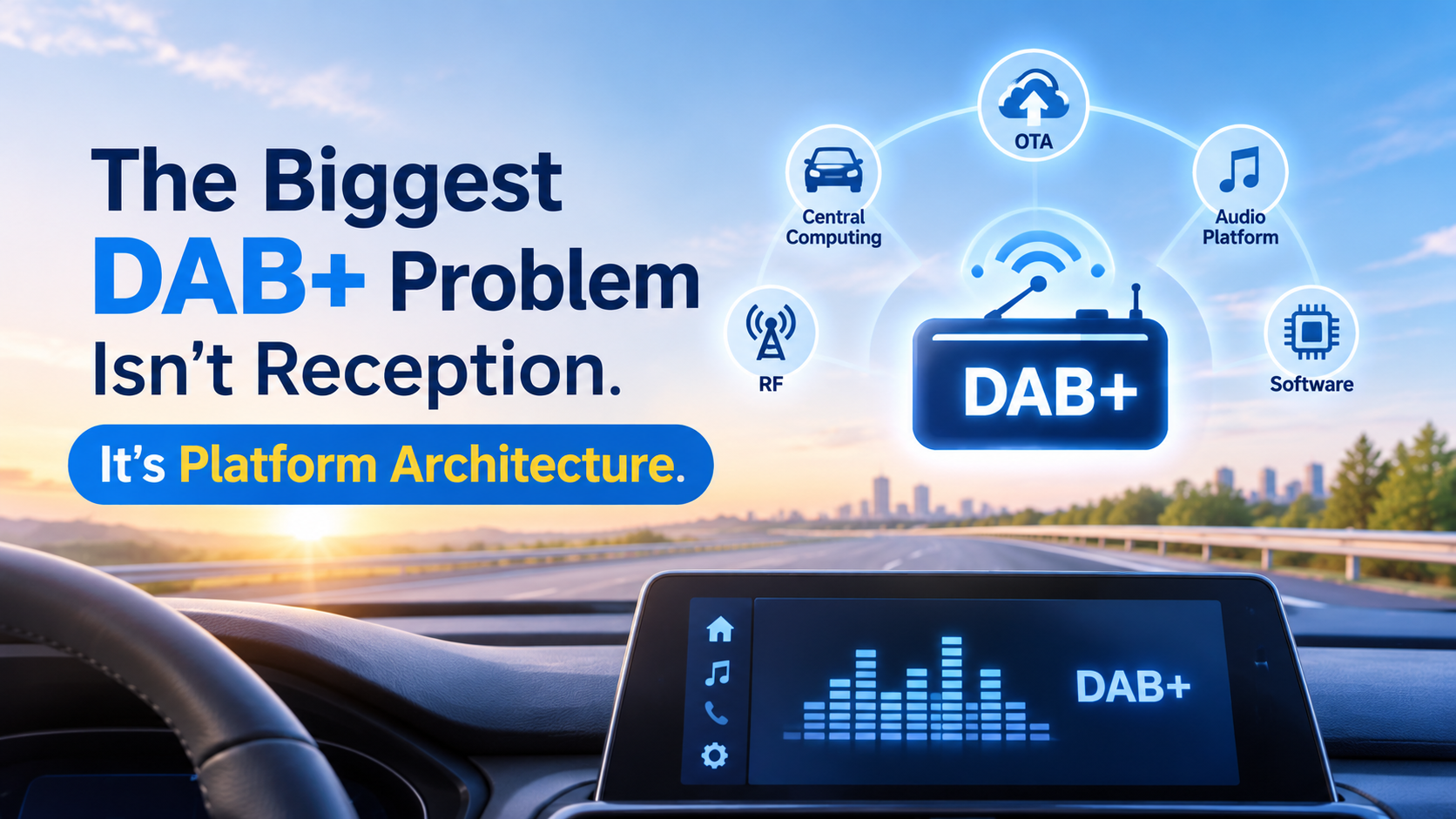
The Biggest DAB+ Problem Isn't Reception. It's Platform Architecture
Read article
 Blog
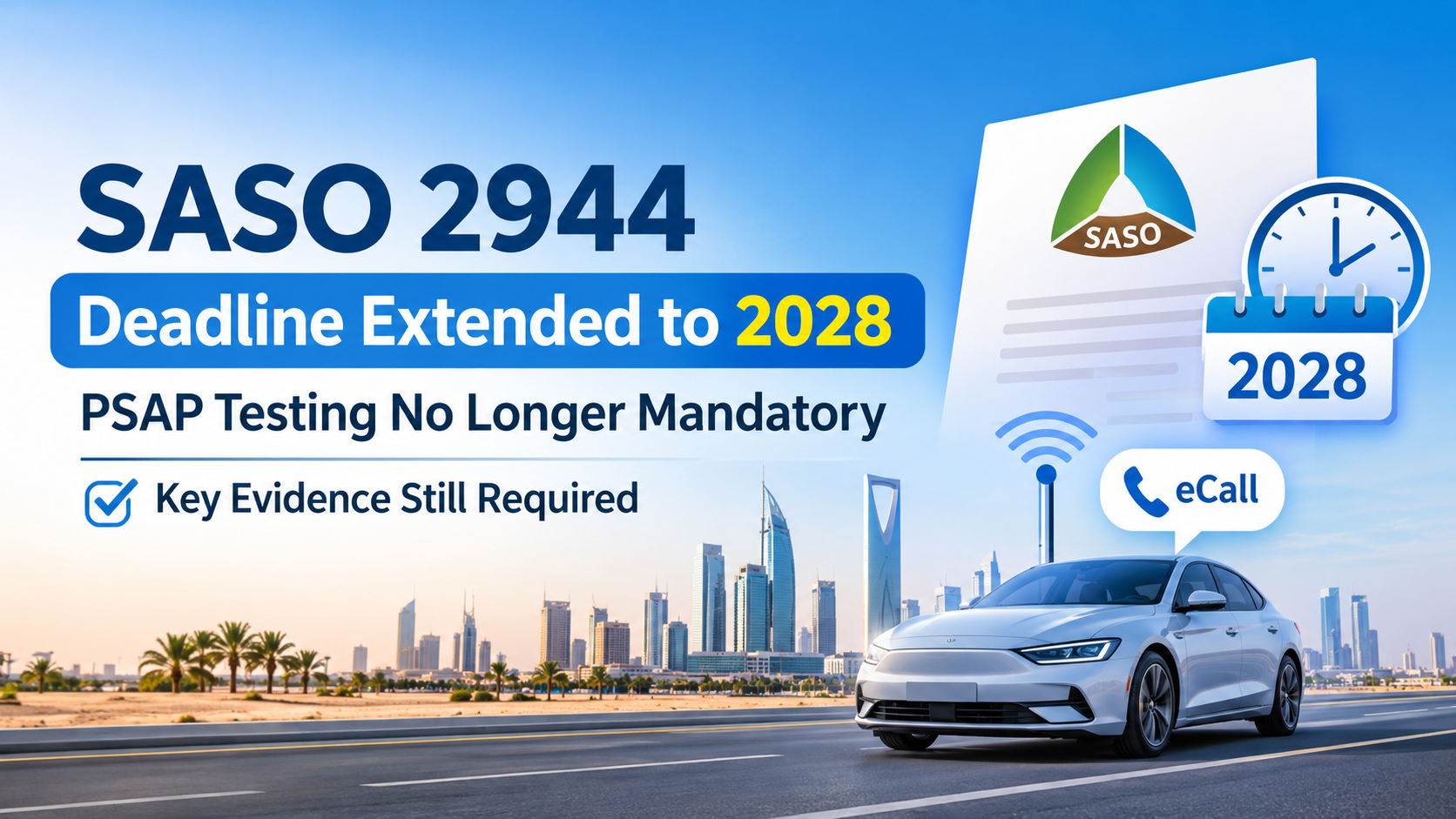
Saudi SASO 2944 Mandatory Date Delayed to 2028: What Evidence Must eCall Manufacturers Still
Read article
 Blog
Your Motorcycle Has Bluetooth, Wi-Fi and a Connected Display. Is It Ready for UN R155?
Read article
 Blog
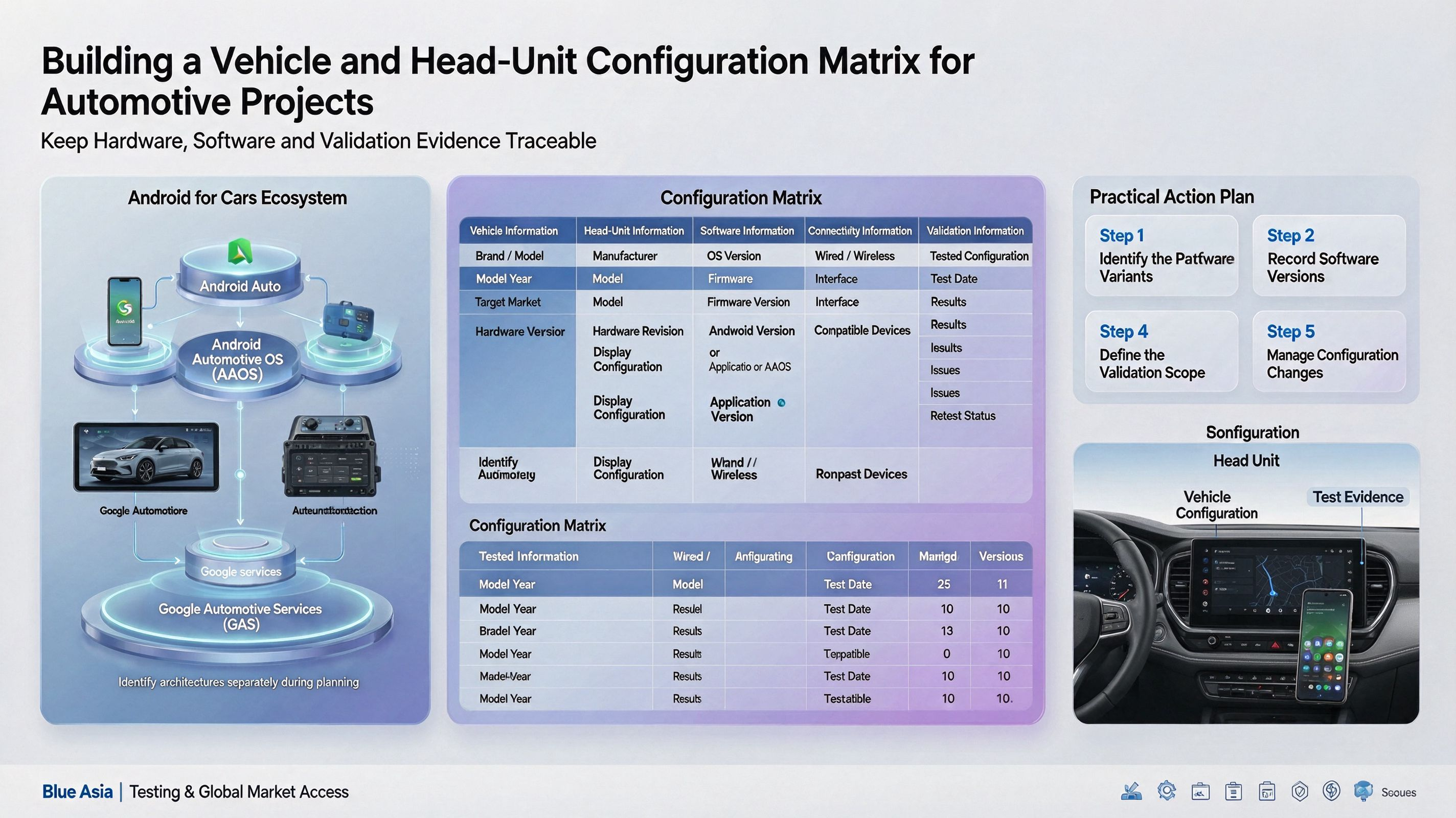
Bluetooth BQB: What Product Teams Should Clarify at Project Start
Read article
 Blog
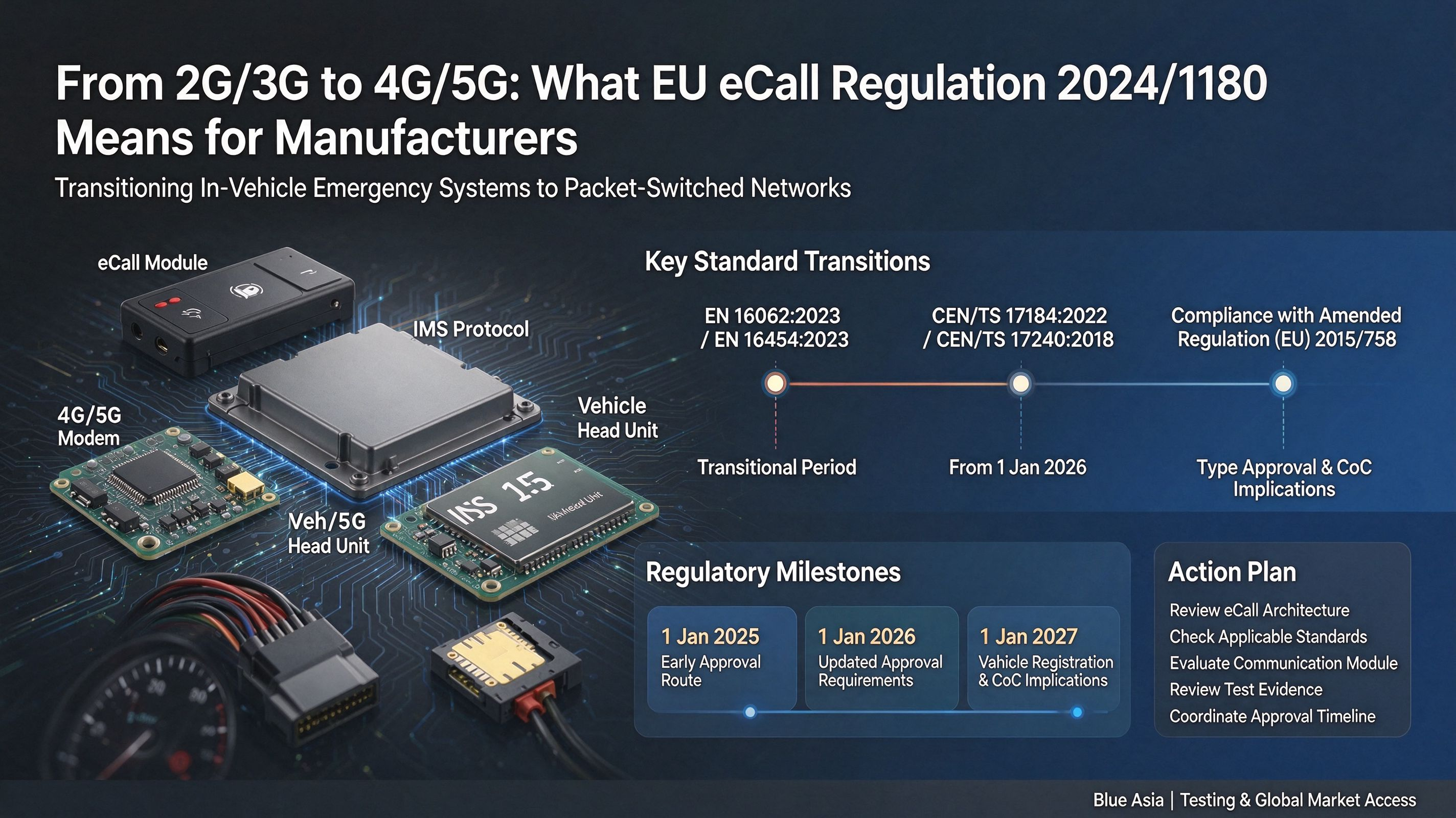
From 2G/3G to 4G/5G: What EU eCall Regulation 2024/1180 Means for Manufacturers
Read article

 4000259520